GHK-Cu
Copper Peptide (Glycyl-L-Histidyl-L-Lysine:Copper(II))
Research Hub — Aggregated Studies
MedTech Research Group aggregates published research from peer-reviewed journals, clinical trials, and academic institutions. We do not conduct original research. All studies cited below are the work of their respective authors and institutions. Sources are linked for verification.
This product is designated FOR RESEARCH USE ONLY (RUO). These compounds have not been approved or cleared under 21 U.S.C. § 505 and have not been evaluated by the FDA for safety, efficacy, or labeling for clinical, diagnostic, or therapeutic use in humans or animals.
MedTech Research Group will only fulfill orders to qualified researchers affiliated with accredited academic institutions, licensed research facilities, or organizations with active IRB/IACUC oversight.
Purchaser Restrictions
- Purchaser must be a qualified researcher at an accredited institution or licensed research facility
- This product may not be sold or redistributed to individual consumers, wellness clinics, health food stores, or retail establishments
- Not intended for human or animal consumption, diagnostic use, or therapeutic application
- Institutional affiliation and research purpose will be verified prior to order fulfillment
Distribution is limited to qualified research use in compliance with applicable federal and state law. These products bear the "For Research Use Only" designation per FDA labeling requirements (minimum 10 pt. font). Ref: 21 U.S.C. § 505; FD&C Act § 201(p) (unapproved new drug definition).
| Risk Tier | GREEN |
| Category | Skin / Cosmetic / Anti-Aging |
| Subcategory | Collagen Synthesis, Skin Remodeling, Wound Healing |
| Pharmacological Class | Peptide-Metal Complex |
| Subclass | Copper-Binding Tripeptide |
| Molecular Type | Tripeptide-copper complex (Glycyl-L-Histidyl-L-Lysine with Cu2+ ion) |
| Origin | Endogenous — GHK-Cu is naturally found in human plasma, saliva, and urine. Plasma levels decline significantly with age (200 ng/mL at age 20 to 80 ng/mL by age 60). |
| Regulatory Status | Research Use Only as injectable. GHK-Cu is widely used in topical cosmetic products (serums, creams) and is generally recognized as safe for cosmetic use. |
| Route of Administration | Subcutaneous injection (research); topical application (cosmetic products) |
| Reconstitution | Lyophilized powder; reconstitute with bacteriostatic water |
| Storage | Refrigerate (2-8°C). Protect from light — copper complexes can be light-sensitive. |
Chemical Properties
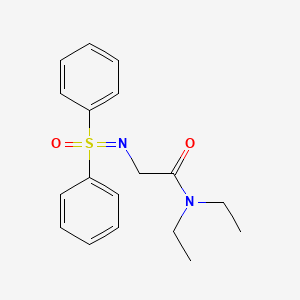
| Molecular Formula | C18H22N2O2S |
| Molecular Weight | 330.4 g/mol |
| Exact Mass | 330.14019912 Da |
| InChI Key | QTGZICYZIQMRAB-UHFFFAOYSA-N |
| Synonyms |
|
| PubChem | View full record |
Source: NCBI PubChem — public domain data
2D structure diagram from NCBI PubChem. This is the actual molecular structure of GHK-Cu.
Description
GHK-Cu (glycyl-L-histidyl-L-lysine:copper(II)) is a naturally occurring tripeptide with a high affinity for copper(II) ions. It was first isolated from human plasma in 1973 by Dr. Loren Pickart, who discovered that plasma from young adults (age 20-25) could stimulate old liver tissue to synthesize proteins characteristic of younger tissue — and identified GHK-Cu as the active factor. This discovery established GHK-Cu as one of the first identified endogenous signaling molecules involved in age-related tissue decline.
The mechanism of action of GHK-Cu is remarkably multifaceted. The peptide functions as a biological signal that resets gene expression patterns toward a healthier, more youthful state. Genomic studies have shown that GHK-Cu modulates the expression of over 4,000 genes — approximately 6% of the human genome. Specifically, it upregulates genes involved in collagen synthesis (Types I, III, and V), decorin production (which regulates collagen fibril assembly), integrin and glycosaminoglycan synthesis, DNA repair enzymes, antioxidant defense systems (superoxide dismutase, glutathione), and stem cell markers. Simultaneously, it downregulates genes associated with inflammation (IL-6, TNF-alpha), oxidative damage, fibrosis (TGF-beta in some contexts), and tissue destruction (certain metalloproteinases).
The copper ion is essential to GHK-Cu's biological activity. Copper is a cofactor for lysyl oxidase (the enzyme that crosslinks collagen and elastin), superoxide dismutase (a critical antioxidant enzyme), and numerous other copper-dependent enzymes involved in tissue maintenance. By delivering copper to these enzyme systems in a bioavailable form, GHK-Cu supports the enzymatic machinery required for tissue repair and maintenance. The peptide also attracts immune cells to wound sites, stimulates nerve growth, and promotes angiogenesis.
In skin specifically, GHK-Cu has been extensively studied for its ability to increase collagen and elastin production, improve skin thickness and elasticity, reduce fine lines and wrinkles, improve skin firmness, reduce photodamage, reduce hyperpigmentation, and accelerate wound healing. These effects have been validated in both in vitro studies and human clinical trials using topical formulations.
Clinical Context
GHK-Cu occupies a unique position as one of the few peptides with both strong scientific evidence AND widespread commercial acceptance. It is already a staple ingredient in premium skincare products from brands like The Ordinary (Buffet), Niod, and numerous medical-grade skincare lines. The injectable form is used in research settings for systemic delivery, which may provide broader effects beyond the skin — including potential benefits for hair growth (it has been shown to enlarge hair follicles and stimulate growth), lung tissue repair (COPD research), and neuroprotection.
- Generally well-tolerated topically with decades of cosmetic use data
- Injectable use has less clinical safety data
- Copper overload is theoretically possible at high doses — monitor in patients with Wilson's disease or other copper metabolism disorders
- The dramatic age-related decline in endogenous GHK-Cu levels (60% reduction by age 60) provides a biological rationale for supplementation
- Synergistic with vitamin C (supports collagen synthesis pathway) and retinoids
- Protect from excessive light exposure during storage
Published Research
Published Research & Clinical Data
Peer-reviewed studies and clinical trial data related to GHK-Cu
3 manually curated
All research below is conducted by independent institutions. MedTech Research Group provides these references for informational purposes only.
GHK peptide as a natural modulator of multiple cellular pathways in skin regeneration
Pickart L, Vasquez-Soltero JM, Margolina A.. BioMed Research International, 2015.PMID: 26236730
Comprehensive review of GHK-Cu's effects on skin remodeling including collagen synthesis, glycosaminoglycan production, and growth factor expression.
The human tripeptide GHK-Cu in prevention of oxidative stress and degenerative conditions of aging
Pickart L, Vasquez-Soltero JM, Margolina A.. Oxidative Medicine and Cellular Longevity, 2012.PMID: 22900128
Review of GHK-Cu as an endogenous tripeptide that declines with age, with evidence for antioxidant, anti-inflammatory, and tissue-remodeling properties.
GHK and DNA: resetting the human genome to health
Pickart L, Margolina A.. BioMed Research International, 2014.PMID: 25276427
Gene expression study showing GHK-Cu modulates expression of 4,000+ human genes, with significant effects on DNA repair, antioxidant, and anti-inflammatory pathways.
1 Registered Clinical Trials
Research data sourced from ClinicalTrials.gov. Public domain (U.S. National Library of Medicine).
MedTech Research Group provides these references for informational purposes. We do not conduct original research. All studies are the work of their respective authors and institutions.
1
Total Trials
1
Recruiting
0
Active
0
Completed
Sponsor: Hudson Biotech · Completed: 2028-03-17
Research Library — 385 Papers
Research data sourced from OpenAlex. CC0 public domain. Articles are the work of their respective authors.
MedTech Research Group provides these references for informational purposes. We do not conduct original research. All studies are the work of their respective authors and institutions.
A Global Review on Short Peptides: Frontiers and Perspectives
Vasso Apostolopoulos, Joanna Bojarska, Tsun‐Thai Chai, et al. · Molecules
Research by Vasso Apostolopoulos et al., published in Molecules. Not conducted by MedTech Research Group.
Bioactive Compounds for Skin Health: A Review
Monika Michalak, Monika Pierzak, Beata Kręcisz, et al. · Nutrients
Research by Monika Michalak et al., published in Nutrients. Not conducted by MedTech Research Group.
Self‐Assembling Peptide‐Based Hydrogels for Wound Tissue Repair
Tong Guan, Jiayang Li, Chunying Chen, et al. · Advanced Science
Research by Tong Guan et al., published in Advanced Science. Not conducted by MedTech Research Group.
Copper complexes as therapeutic agents
Clare Duncan, Anthony R. White · Metallomics
Research by Clare Duncan et al., published in Metallomics. Not conducted by MedTech Research Group.
Superabsorbent polymers: A review on the characteristics and applications of synthetic, polysaccharide-based, semi-synthetic and ‘smart’ derivatives
Arn Mignon, Nele De Belie, Peter Dubruel, et al. · European Polymer Journal
Research by Arn Mignon et al., published in European Polymer Journal. Not conducted by MedTech Research Group.
Redox Chemistry of Copper–Amyloid‐β: The Generation of Hydroxyl Radical in the Presence of Ascorbate is Linked to Redox‐Potentials and Aggregation State
Luc Guilloreau, Sarah Combalbert, Alix Sournia‐Saquet, et al. · ChemBioChem
Research by Luc Guilloreau et al., published in ChemBioChem. Not conducted by MedTech Research Group.
Role of Copper in the Onset of Alzheimer’s Disease Compared to Other Metals
Soghra Bagheri, Rosanna Squitti, Thomas Haertlé, et al. · Frontiers in Aging Neuroscience
Research by Soghra Bagheri et al., published in Frontiers in Aging Neuroscience. Not conducted by MedTech Research Group.
The human tri-peptide GHK and tissue remodeling
Loren Pickart · Journal of Biomaterials Science Polymer Edition
Research by Loren Pickart, published in Journal of Biomaterials Science Polymer Edition. Not conducted by MedTech Research Group.
Copper signalling: causes and consequences
Julianna Kardos, László Héja, Ágnes Simon, et al. · Cell Communication and Signaling
Research by Julianna Kardos et al., published in Cell Communication and Signaling. Not conducted by MedTech Research Group.
Dendrimers as therapeutic agents: a systematic review
Virendra Gajbhiye, Vijayaraj K Palanirajan, Rakesh Kumar Tekade, et al. · Journal of Pharmacy and Pharmacology
Research by Virendra Gajbhiye et al., published in Journal of Pharmacy and Pharmacology. Not conducted by MedTech Research Group.